Before You Compare Prices, Understand Australia Food Trailer Compliance
When I first started looking for a food trailer, my biggest concern was simple:
“How much does it cost?”
Like most first-time buyers, I spent hours comparing quotations, trailer sizes, kitchen layouts, and shipping costs.
What I didn’t realize was that in Australia, buying a food trailer is not just buying a trailer.
You’re actually buying a vehicle and a commercial kitchen combined into one unit.
And if either part fails compliance requirements, the consequences can be expensive:
- The trailer cannot be registered.
- The trailer cannot be insured.
- The local council may reject your application.
- You cannot obtain a Food Business Licence.
- Your business cannot legally operate.
This is why understanding Australia food trailer compliance, food trailer registration Australia, and local council food truck requirements should come before comparing prices.
In this guide, I’ll walk you through the exact compliance steps every beginner should understand before importing a food trailer into Australia.
Part 1: Importing and Registering a Food Trailer in Australia
Many people assume a food trailer is simply a kitchen on wheels.
Australian authorities see it differently.
Your trailer must satisfy both:
- Vehicle regulations
- Food business regulations
Let’s start with the vehicle side.
1. VIN (Vehicle Identification Number)
Every road-legal trailer in Australia requires a unique VIN.
A VIN is a 17-character code that acts like the trailer’s fingerprint.
Typical VIN structure:
- Characters 1–3: Manufacturer identifier
- Characters 4–8: Vehicle attributes
- Character 9: Security check digit
- Character 10: Manufacturing year
- Character 11: Factory code
- Characters 12–17: Serial number
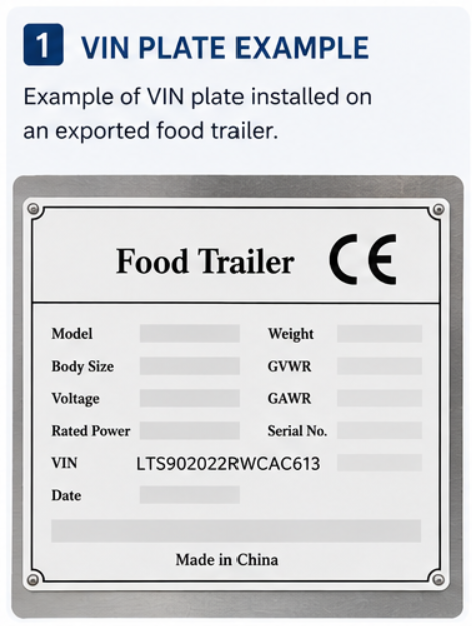
Without a VIN, registration is usually impossible.
The VIN is required for:
- Registration
- Insurance
- Customs clearance
- Vehicle identification
2. ADR (Australian Design Rules)
ADR stands for Australian Design Rules.
Think of ADR as Australia’s vehicle safety standard.
Key trailer components must comply with ADR requirements.
Examples include:
- Tail lights
- Brake systems
- Safety chains
- Trailer couplings
- Reflectors
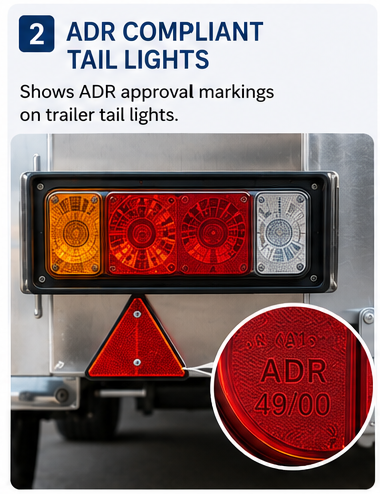
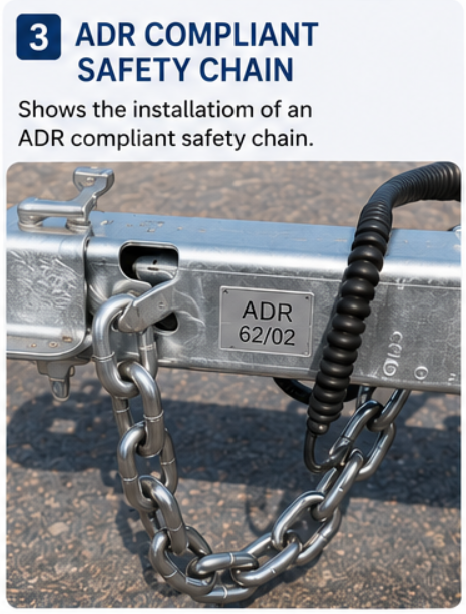
Many compliant parts have approval markings stamped directly on the component.
When evaluating a supplier, ask:
“Can you provide ADR-compliant component documentation?”
3. CTA (Component Type Approval)
CTA refers to approval for critical trailer components.
This proves the components meet Australian standards.
Common CTA-approved components include:
- Couplings
- Brake assemblies
- Lighting systems
- Safety chains
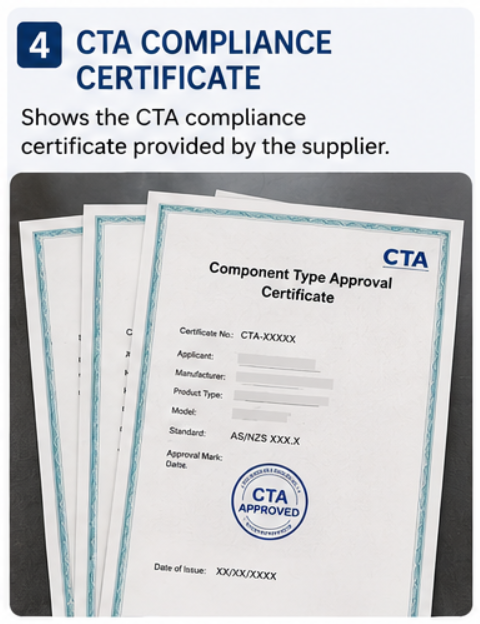
Always request:
- CTA certificates
- ADR component certificates
- Supplier compliance documents
before placing an order.
4. RAV Registration
RAV stands for Register of Approved Vehicles.
Imported trailers generally need to be entered into the approved vehicle system before registration can proceed.
Without the correct approval pathway, the trailer may not be eligible for registration.
Practical Tip: What Documents Should You Request From Your Supplier?
Before paying a deposit, ask for:
✓ VIN documentation
✓ ADR-related component information
✓ CTA certificates
✓ Trailer specifications
✓ Electrical system details
✓ Previous Australian export cases
Whenever possible, choose suppliers who have successfully exported food trailers to Australia before.
Experience matters.
Part 2: Local Council Approval and Food Business Licensing
Even after registration, your trailer still cannot legally operate until local council requirements are met.
This is where many beginners get caught.
Road registration does NOT equal business approval.
To obtain a Food Business Licence, councils typically assess four major systems.
1. Kitchen Equipment Compliance
The easiest part.
Most electric commercial equipment is generally acceptable when properly installed.
Examples:
- Coffee machines
- Refrigerators
- Freezers
- Grills
- Bain maries
Electrical equipment should still comply with local requirements.
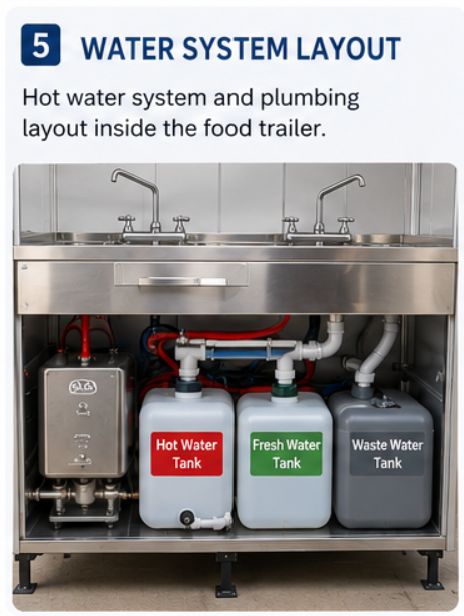
2. Water System Compliance
Australian councils place significant emphasis on water systems.
Most councils expect:
- Hot water supply
- Cold water supply
- Hand-washing facilities
Many food trailers are required to have separate water arrangements for food preparation and hygiene purposes.
3. Electrical Compliance
Electrical compliance is critical.
Many buyers specifically request SAA-certified electrical components.
After arrival, local licensed electricians typically inspect and certify the installation.
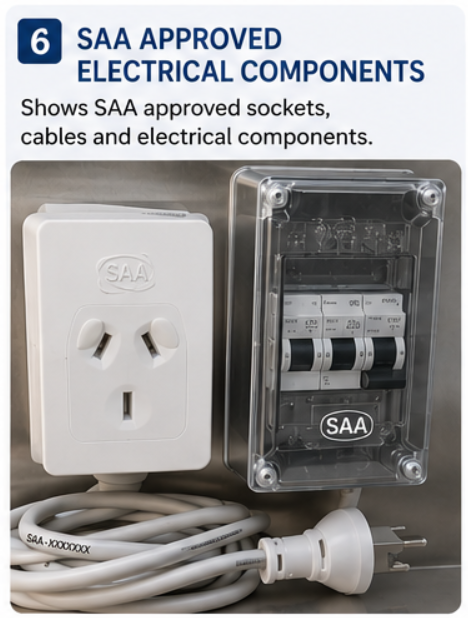
Prepare:
- Electrical schematics
- Component specifications
- Supplier electrical documentation
4. Gas System Compliance
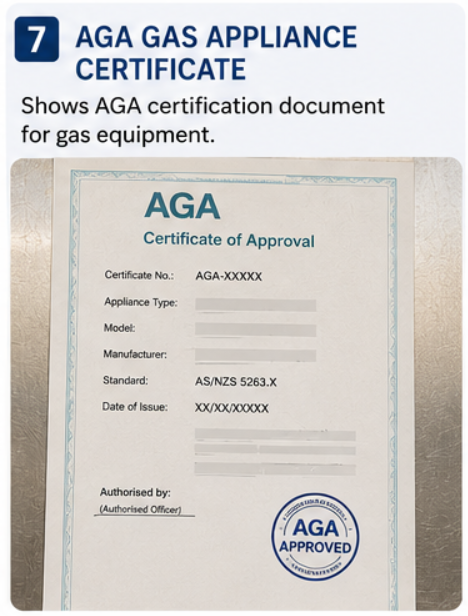
For first-time buyers, gas systems are usually the most complicated area.
Gas appliances often require:
- AGA-approved equipment
- Local inspection
- Licensed gas fitter certification
In many cases, electric kitchens are simpler and easier to approve than gas kitchens.
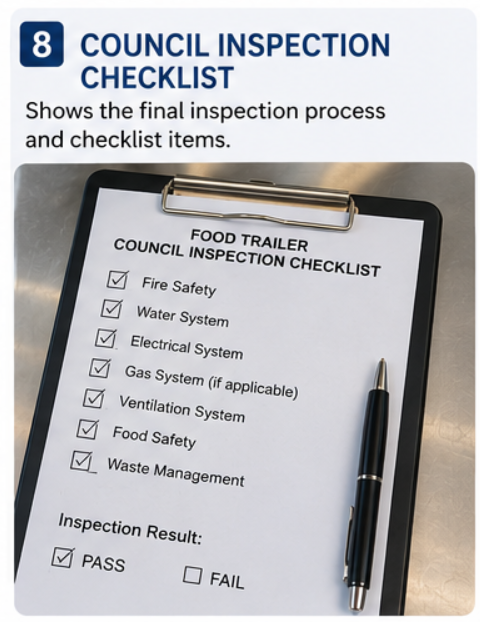
Final Council Inspection
Before issuing a Food Business Licence, councils may inspect:
- Food safety layout
- Plumbing systems
- Electrical systems
- Ventilation systems
- Fire safety equipment
Only after passing inspection can the food business licence process move forward.
Helpful Resources
Official Australian Vehicle Standards
Australian Government Information
Sydney Local Council Food Business Information
Final Thoughts
If you’re planning to import a food trailer into Australia, don’t make the mistake of comparing suppliers based only on price.
A cheaper trailer can become far more expensive if it fails compliance requirements.
Before choosing a supplier, make sure you fully understand:
✓ VIN requirements
✓ ADR compliance
✓ CTA certification
✓ RAV approval pathways
✓ Local council food business requirements
The safest approach is simple:
Learn the compliance rules first. Then choose the supplier.
Not the other way around.